Engine-derived ROI benchmarks for Sedona-area short-term rentals, single-family rentals, and small commercial properties. Numbers come from running real fixtures through the Cost Seg Smart engine, same engine that produces your actual study. Studies from $495.
Operated by Cost Seg Smart. Studies are IRS-aligned with internal technical review & QC included. 5 fixture benchmarks computed May 2026.
Numbers above are engine-estimated outputs from running 5 representative fixtures, not promises about what your specific property will produce. Results vary based on actual property condition, year built, renovation history, county assessor data quality, and rental treatment (STR vs LTR). Full per-fixture table, neighborhood breakdown, and downloadable CSV/PDF on the Sedona cost seg benchmarks page.
Sedona is the most architecturally and visually distinctive STR market in the network, and the cost-seg case is shaped by two interacting factors specific to Red Rock Country. The view-premium scarcity dominates basis allocation in iconic red-rock-view sub-markets. Engine outputs for the Chapel area, Red Rock Loop Road, and view-oriented Uptown Sedona properties run 32–38% land allocation, among the highest in the network, comparable to Deer Valley in Park City and Rosemary Beach on 30A. View-premium land scarcity translates to compressed depreciable basis as a percentage of purchase, which compresses reclassification ratio percentages even when absolute dollar deductions remain large.
Arizona's partial decoupling from federal §168(k) is the state-tax wrinkle. AZ has historically required addbacks for federal bonus depreciation on the Arizona Schedule X reconciliation, with the addback amount recovered over the regular MACRS schedule. For 2025+ acquisitions under OBBBA's restored 100% federal bonus, the practical effect is a small AZ-side timing mismatch at the flat 2.5% rate, the dollar impact is modest (1% of accelerated reclassification dollars on a state-side timing-delay basis) but should be modeled into your CPA workflow. The federal benefit at 100% is unaffected.
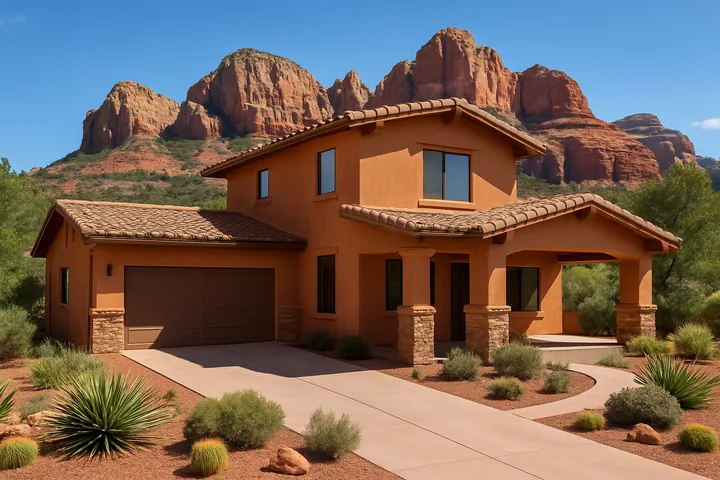
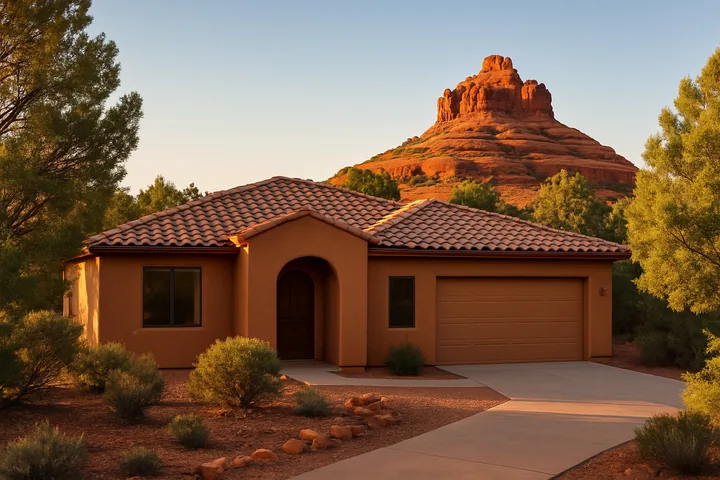
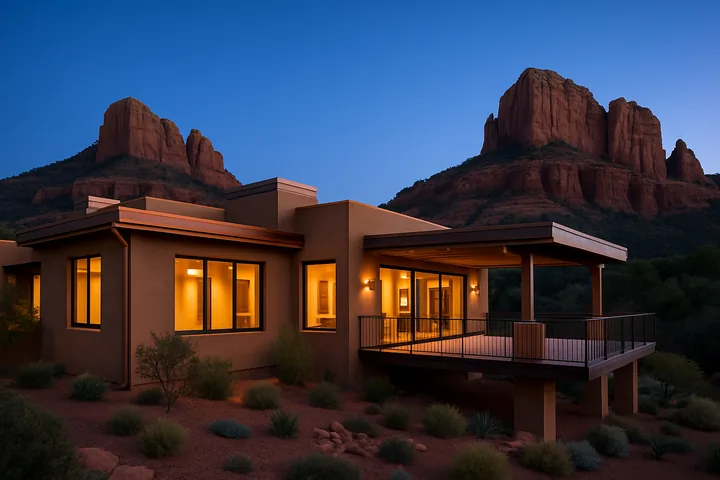
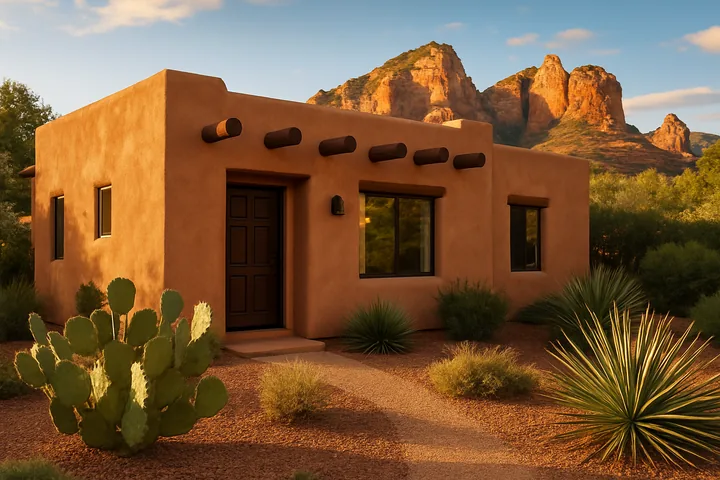
Property archetype-wise, Sedona is unusual. The market combines: red-rock-view luxury casitas where the view-premium is the dominant value driver; West Sedona SFR with substantial post-2010 STR-furnishing renovation; Village of Oak Creek (Yavapai County jurisdiction with lighter regulation) lower-cost SFR vacation rental product; and Oak Creek Canyon forested-mountain-corridor properties that mix vacation and primary-residence use. The engine treats these sub-markets distinctly, view-premium properties compress reclass percentage; off-view West Sedona and Village of Oak Creek properties produce cleaner reclass-as-percent-of-basis ratios despite lower absolute basis dollars.
Decoupling: Arizona's bonus depreciation conformity has been modified multiple times. Verify current-year treatment with your CPA. The federal deduction is unaffected; only the AZ Schedule X reconciliation is the variable.
Verify with your CPA. State tax conformity rules for federal §168(k) bonus depreciation are adjusted frequently, multiple states have modified their treatment two or more times in the past decade. The general framing on this page reflects our understanding as of May 2026, but you should always verify current-year treatment with a qualified CPA or tax attorney before relying on specific dollar projections for your situation.
These aren't rough estimates. Each fixture was run through the same engine that produces your actual study, RSMeans 2026 base costs, BLS PPI time index, county assessor land allocation, IRS Pub. 946 / Rev. Proc. 87-56 MACRS classification, 100% bonus depreciation per OBBBA.
| Purchase price | $1,185,000 |
| Depreciable basis | $921,100 |
| Land allocation | 22.3% |
| 5-year reclassified | $171,136 |
| 15-year reclassified | $59,753 |
| Total reclass | 25.5% |
| Purchase price | $825,000 |
| Depreciable basis | $646,635 |
| Land allocation | 21.6% |
| 5-year reclassified | $127,042 |
| 15-year reclassified | $39,157 |
| Total reclass | 26.3% |
| Purchase price | $685,000 |
| Depreciable basis | $539,095 |
| Land allocation | 21.3% |
| 5-year reclassified | $105,617 |
| 15-year reclassified | $34,780 |
| Total reclass | 26.6% |
| Purchase price | $1,485,000 |
| Depreciable basis | $1,170,626 |
| Land allocation | 21.2% |
| 5-year reclassified | $235,748 |
| 15-year reclassified | $73,016 |
| Total reclass | 26.9% |
| Purchase price | $1,325,000 |
| Depreciable basis | $1,024,225 |
| Land allocation | 22.7% |
| 5-year reclassified | $110,239 |
| 15-year reclassified | $70,823 |
| Total reclass | 17.7% |
Cost-seg ROI varies more by neighborhood than by city. Sedona's 5 sub-markets each have their own land-allocation pattern and property archetype:
| Neighborhood | Typical value | Typical land allocation | Profile note |
|---|---|---|---|
| Uptown Sedona | $1,185,000 | ~32% | Walkable resort-core sub-market near Sedona's primary commercial and tourism corridor. Higher land allocation due to walkability premium. Mix of resort condo and SFR. Active STR rental cadence. |
| West Sedona | $825,000 | ~26% | Residential SFR-dominant sub-market west of Highway 89A. Lower land allocation than Uptown. Mix of LTR and STR. Most affordable Sedona-proper entry point. |
| Village of Oak Creek (Yavapai County) | $685,000 | ~24% | Yavapai County jurisdiction south of Sedona proper. Lower entry pricing, lower land allocation. Mix of vacation rental and primary-residence stock. Lighter permit environment than City of Sedona. |
| Chapel area / Red Rock Loop Rd | $1,485,000 | ~36% | Iconic red-rock-view residential market near Chapel of the Holy Cross. Highest land allocation in our Sedona fixtures, view-premium scarcity dominates basis. Luxury SFR and casita product. |
| Oak Creek Canyon (north of Sedona) | $1,325,000 | ~28% | Forested mountain corridor along Oak Creek Canyon north of Sedona toward Flagstaff. Lower-density rural SFR. Mid-tier land allocation. Mix of vacation rental and primary residence. |
Methodology note: "Typical land allocation" reflects baseline patterns for the sub-market. For ultra-premium or resort-tier inventory where reconstruction cost exceeds 2.0× the implied depreciable basis after subtracting baseline land, the engine applies a premium land floor (~50%) to keep the study within audit-defensible territory. This means individual fixture engine output may exceed the neighborhood typical, especially for resort-tier ski-in/ski-out, beachfront, or view-premium product where land scarcity dominates value. See the /data/ page for per-fixture land-source attribution. Results vary substantially by specific property condition, renovation history, and assessor records.
City of Sedona maintains an active STR permit regime with annual renewal requirements, density caps in certain residential zones, and compliance triggers (noise complaints, parking violations) that can revoke permits for repeat violations. Yavapai County (Village of Oak Creek) and Coconino County unincorporated areas (Oak Creek Canyon) operate lighter regulatory regimes. STR-intent buyers should verify the property's jurisdiction, Sedona city limits vs Yavapai County vs Coconino County, before underwriting permit availability. Material participation under §469 is achievable for self-managing operators but harder for buyers using full-service property management (Vacasa, Best Western Sedona-affiliated, local operators), document hours contemporaneously. The Arizona Schedule X addback math should be explicit in your CPA workflow given Arizona's partial conformity.
For the full IRS-rule reference layer (§168(k), §469 material participation, state conformity), see irsdepreciationrules.com, our open reference site.
Modestly. Arizona historically required addbacks for federal §168(k) bonus depreciation on Schedule X, with the addback amount recovered over the regular MACRS schedule on the AZ return. For 2025+ acquisitions under OBBBA's restored 100% federal bonus, the AZ-side timing impact is small in absolute dollars given Arizona's 2.5% flat rate. For a Sedona owner taking $90,000 of accelerated reclassification, federal Year-1 savings at 37% is $33,300. The AZ-side total savings is approximately $90,000 × 2.5% = $2,250, but the AZ acceleration is partially deferred, a portion captures in Year 1 and the remainder recovers over 27.5 years (residential) or 39 years (commercial). The total AZ savings is the same as full conformity; only the timing is mismatched. Verify current AZ conformity treatment with your CPA, Arizona has adjusted the addback methodology multiple times.
View-premium land allocation. Engine outputs for view-oriented Sedona sub-markets run 32–38% land, compared to 24–28% for West Sedona off-view product and 22–26% for Village of Oak Creek Yavapai County properties. The red-rock-view premium concentrates value in the land component rather than the structure, which compresses depreciable basis as a percentage of purchase, which compresses reclassification ratio percentages. Absolute dollar deductions on a $1.48M Chapel area property remain large because the basis is large, but the percent-of-purchase ROI tells a different story. Buyers optimizing percent-of-purchase cost-seg ROI typically should look at West Sedona or Village of Oak Creek product rather than view-premium Chapel area or Red Rock Loop.
Yes, meaningfully for STR-intent buyers. Village of Oak Creek is part of unincorporated Yavapai County, NOT within the City of Sedona limits. Yavapai County operates a lighter STR regulatory regime than the City of Sedona's permit system, STR registration with Arizona Department of Revenue and Yavapai County lodging tax remittance applies, but there's no city density cap or permit-renewal compliance review. For absentee STR investors, the jurisdictional difference matters for hold-period modeling: City of Sedona permits face annual renewal compliance risk; Village of Oak Creek operates more permit-stable conditions. Engine cost-seg output is identical between the two jurisdictions; what differs is the operating-economics-and-permit overlay.
Same Arizona state tax treatment (2.5% flat, partial federal conformity, Schedule X addback). Same engine treatment of STR FF&E uplift for furnished short-term rentals. The structural differences are property mix, demand profile, and ADR. Scottsdale is a metro luxury STR market with Phoenix Metro demand drivers, higher year-round occupancy, and a broader range of property types (luxury condo, golf-resort villa, urban SFR). Sedona is a destination wellness/spiritual tourism market with seasonal demand peaks, more uniformly SFR property stock, and view-premium concentrated in specific sub-markets. For an Arizona-portfolio investor, both markets work cleanly with the same AZ Schedule X reconciliation; the choice typically comes down to demand profile and operating preference rather than cost-seg differential.
Yes for properties with substantial post-2000 renovation history, particularly West Sedona 2000s SFR stock and older Uptown properties. Sedona renovation patterns typically include: full electrical upgrades for STR-furnishing power demand (new panels, dedicated circuits, 5-year work); kitchen and bath modernization for vacation-rental product (FF&E + fixtures, 5-year); HVAC additions for desert climate (mixed 5/27.5); outdoor living renovations including patios, fire pits, and view-oriented decking (15-year land improvements); and STR-furnishing packages (5-year FF&E). The engine treats renovation_cost as a separate allocable pool with its own MACRS distribution, for a heavily renovated West Sedona property with $200K+ of post-2015 renovation against an $825K base, the renovation pool can contribute 50–65% of the total accelerated component.
More general cost-seg questions answered at costsegsmart.com/faq/.
Cost Seg Smart studies are IRS-aligned, engineering-reviewed, and include written audit defense. Pricing is transparent and starts at $495 for residential properties under $300K, full pricing on the main site.